Tell us about the job
Takes about a minute. No obligation.
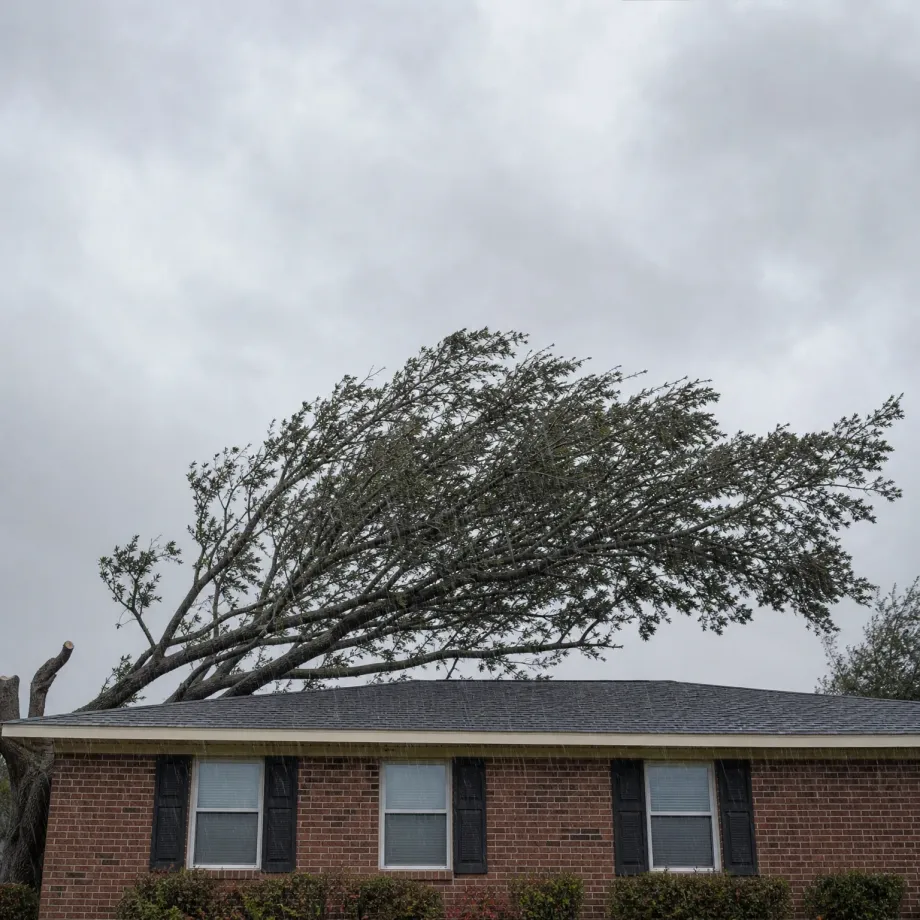
A contractor quoting a heat pump install in Fulton County cannot work from a generic load table and call it done. 218 severe weather events were recorded in Fulton County, Georgia between 2015 and 2024. At that rate, severe weather is a standing condition of operating here, and it shapes what a properly sized system looks like before anyone picks a model. A unit undersized for what this area regularly delivers will run hard and short-cycle from the start. Sizing and equipment selection are local decisions in this county, not catalog ones.
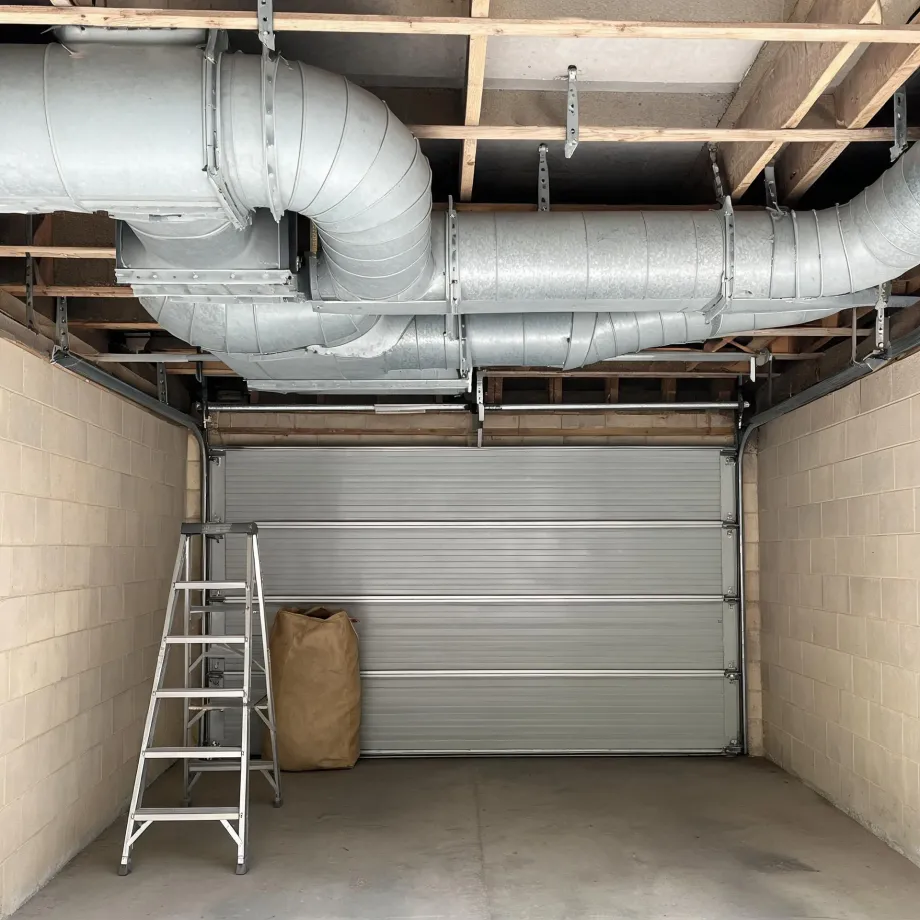
Ductwork designed for a gas furnace moves air differently than a heat pump needs it to. Half the homes in Fulton County, Georgia were built in 1993 or earlier (2020-2024 ACS 5-year). That gap between when the ducts were laid and what a new heat pump requires is where an installation gets decided: a contractor who opens the walls and measures static pressure is answering a question about the existing trunk lines, not the equipment going in. Electrical service from that era often wants a close look too, since heat pumps draw in a way older panels were not wired to expect.
What a Heat Pump Installation Puts in Your Home
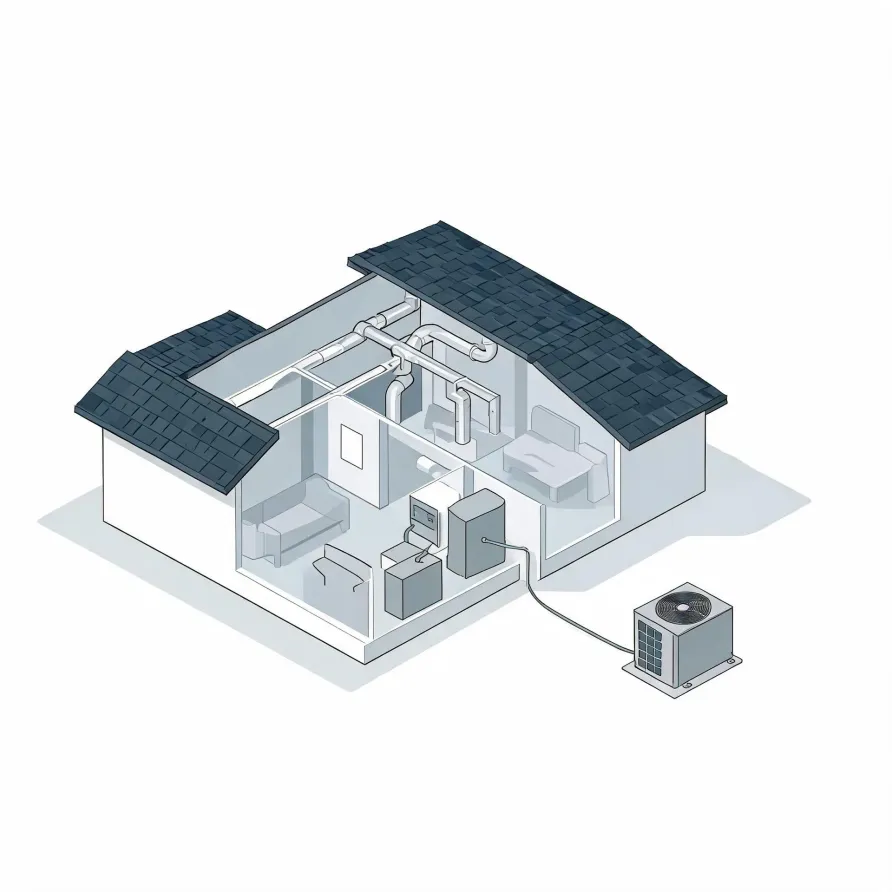
The outdoor unit sits on a pad beside the house and holds the compressor and coil that do the bulk of the work. Inside, the air handler mounts in a closet, attic, or utility room and moves conditioned air through the home. Together these two units are what a new heat pump installation adds to the structure.
A refrigerant line set runs between the outdoor and indoor units, carrying the working fluid through both coils. A thermostat on an interior wall gives the homeowner control over the whole system, and a condensate drain line carries moisture away from the air handler to a floor drain or outside.
The drawing shows a typical layout, and a licensed contractor determines exactly how each piece fits into your specific home.
Get matched in Fulton CountyFulton County, by the numbers
218 severe weather events were recorded in Fulton County, Georgia between 2015 and 2024.
NOAA National Centers for Environmental Information, Storm Events Database, bulk CSV export, events 2015-01-01 through 2024-12-31.Half the homes in Fulton County, Georgia were built in 1993 or earlier (2020-2024 ACS 5-year).
U.S. Census Bureau, 2020-2024 American Community Survey 5-Year EstimatesFulton County, Georgia holds 507,119 housing units (2020-2024 ACS 5-year).
U.S. Census Bureau, 2020-2024 American Community Survey 5-Year EstimatesOwners occupy 54.3% of the occupied homes in Fulton County, Georgia (2020-2024 ACS 5-year).
U.S. Census Bureau, 2020-2024 American Community Survey 5-Year EstimatesSevere Weather Events in Fulton County
Heating and cooling loads are set by local conditions, and conditions here include weather that puts real stress on equipment over time. A heat pump sized and installed for this climate handles that stress better than one specified for somewhere else.
218 severe weather events, 2015–2024. Source: NOAA National Centers for Environmental Information, Storm Events Database.