Tell us about the job
Takes about a minute. No obligation.
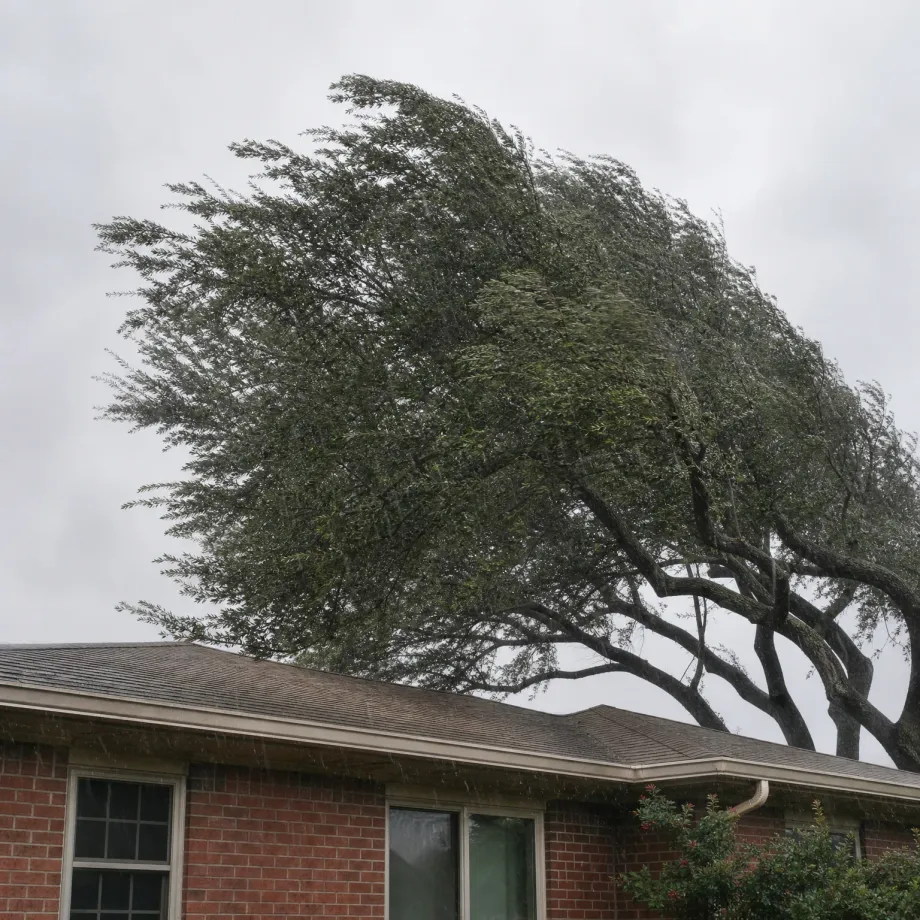
Sizing a heat pump in Clayton County means working out what the system will be asked to carry year after year, and that question has a concrete answer here. 51 severe weather events were recorded in Clayton County, Georgia between 2015 and 2024. At that rate, severe weather is part of the normal operating environment, and a contractor who ignores it when selecting equipment capacity is quoting for a place that does not exist. Ductwork connections, refrigerant line specs, and the unit's rated capacity all get set at installation. Getting them wrong for this climate produces a system that runs harder and longer than it should from the first season.
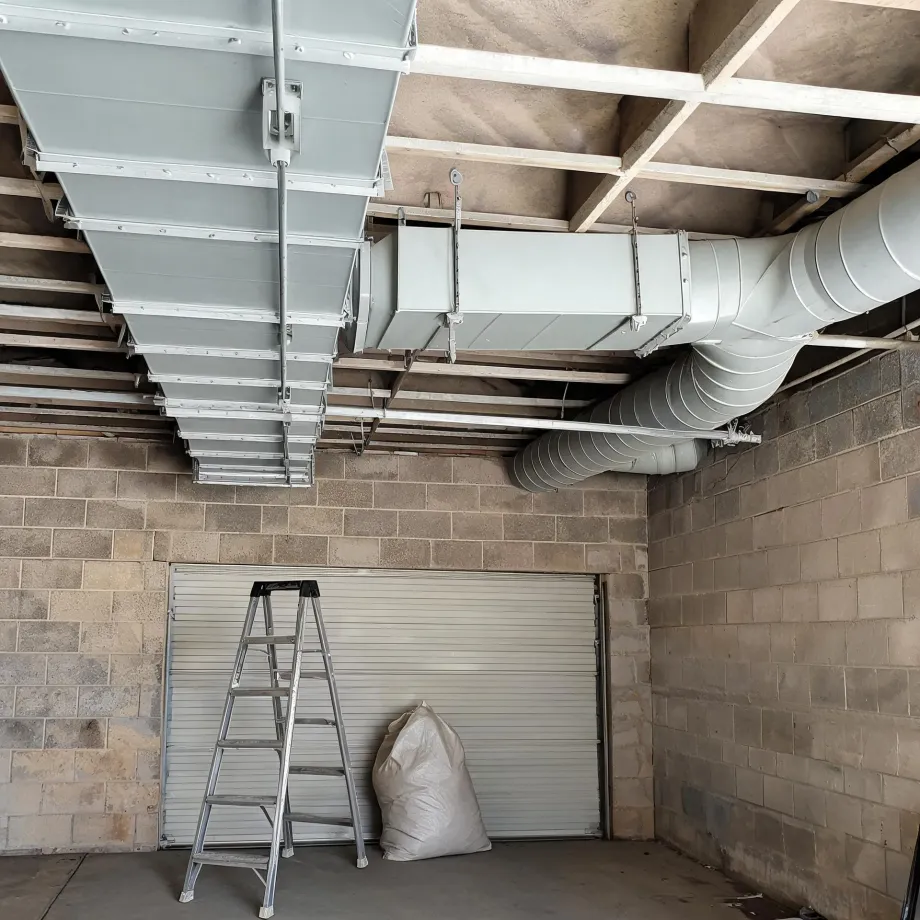
Ductwork sized for an older system runs through a large share of the homes a contractor will quote in this county. Half the homes in Clayton County, Georgia were built in 1989 or earlier (2020-2024 ACS 5-year). What that means for a heat pump installation is specific: heat pumps move air differently than the systems those ducts were designed around, and a contractor has to assess whether the existing runs, returns, and connections will carry the new load before any equipment gets ordered. The electrical service gets the same look, since a heat pump's draw may not match what the panel was built to supply.
What a Heat Pump Installation Covers in Your Home
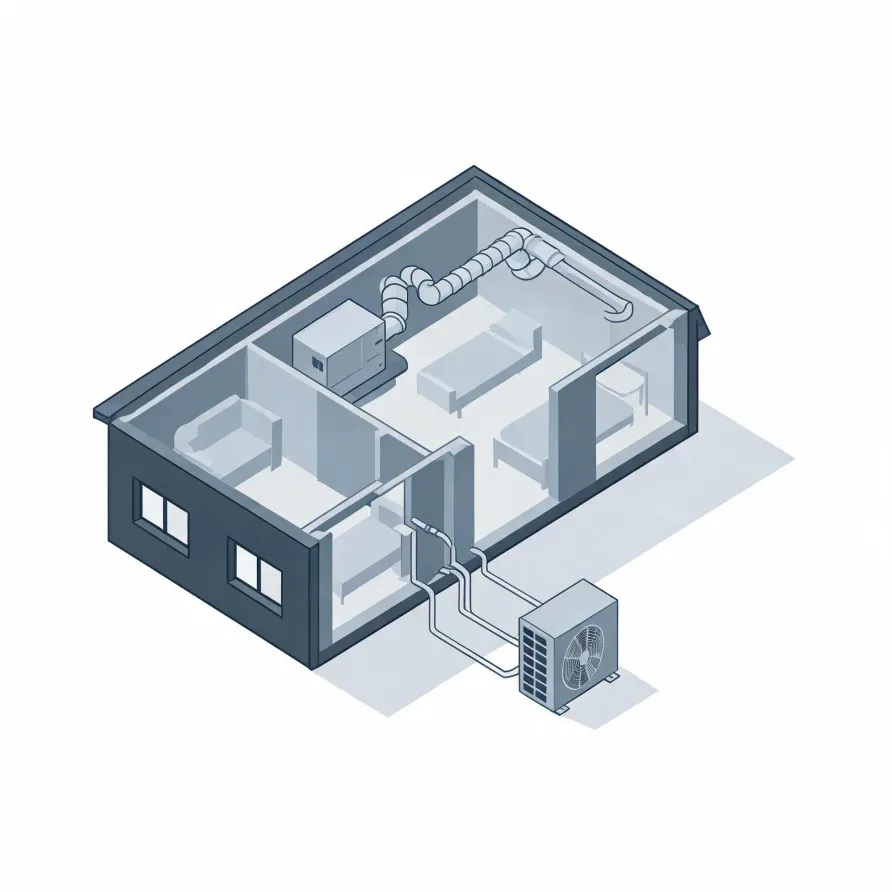
The outdoor unit sits on a pad beside the house and holds the compressor and coil that do the system's core work. Inside, the air handler mounts in a closet, attic, or utility space and moves conditioned air through the home. Together these two units are what a contractor sets in place.
A refrigerant line set runs between the outdoor and indoor units, connecting them through a small penetration in the wall. A thermostat mounts on an interior wall and gives the homeowner control over the system. Both are part of the installation a contractor carries out.
The drawing shows a typical layout, and a licensed contractor determines what applies to your specific home.
Get matched in Clayton CountyClayton County, Georgia, by the numbers
51 severe weather events were recorded in Clayton County, Georgia between 2015 and 2024.
NOAA National Centers for Environmental Information, Storm Events Database, bulk CSV export, events 2015-01-01 through 2024-12-31.Half the homes in Clayton County, Georgia were built in 1989 or earlier (2020-2024 ACS 5-year).
U.S. Census Bureau, 2020-2024 American Community Survey 5-Year EstimatesClayton County, Georgia holds 115,476 housing units (2020-2024 ACS 5-year).
U.S. Census Bureau, 2020-2024 American Community Survey 5-Year EstimatesOwners occupy 54.5% of the occupied homes in Clayton County, Georgia (2020-2024 ACS 5-year).
U.S. Census Bureau, 2020-2024 American Community Survey 5-Year EstimatesSevere Weather Events in Clayton County
Heating and cooling equipment carries the load that local weather demands of it. How hard a heat pump works over its life is a local question, and the weather record for this area is part of the answer.
51 severe weather events, 2015–2024. Source: NOAA National Centers for Environmental Information, Storm Events Database.