Tell us about the job
Takes about a minute. No obligation.
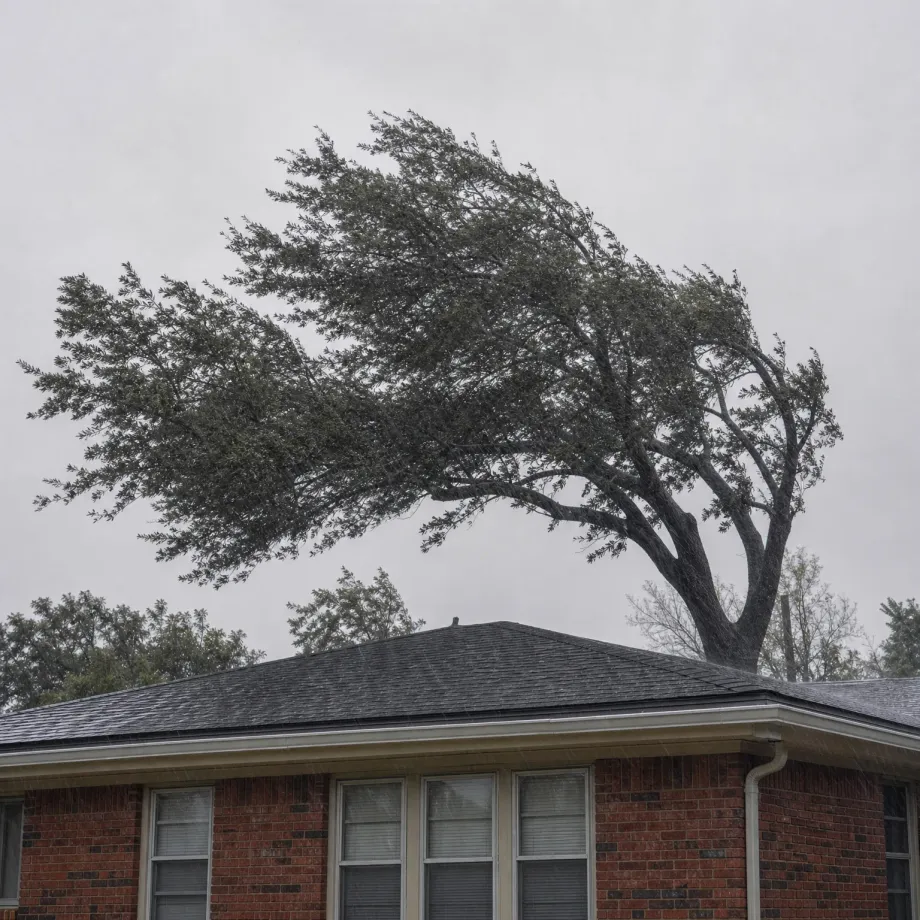
Sizing a heat pump in Gilmer County starts with what the system will actually run against, and that is a local question a catalog spec sheet cannot settle. 76 severe weather events were recorded in Gilmer County, Georgia between 2015 and 2024. At that rate, severe weather is a standing operating condition, and a contractor quoting an install here has to account for it in equipment selection, refrigerant line placement, and mounting decisions before the unit ever runs its first cycle. A system installed to handle that load from the start costs less to keep running than one corrected later.
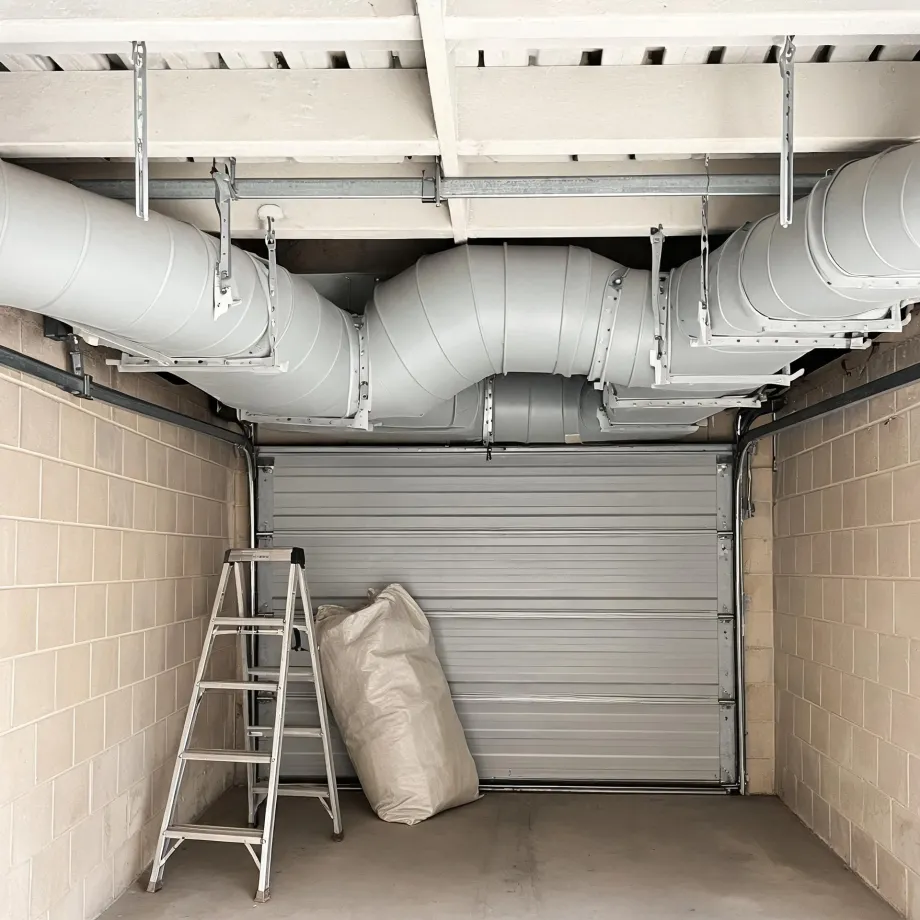
Ductwork laid out for an older system carries assumptions about airflow, return placement, and load distribution that a heat pump does not share. Half the homes in Gilmer County, Georgia were built in 1998 or earlier (2020-2024 ACS 5-year). A contractor quoting a heat pump installation here measures static pressure and checks trunk sizing before the equipment selection means anything, because ductwork that cannot move the right volume of air will undercut whatever unit goes on it. The electrical service gets the same check: heat pump loads differ from what those panels were originally rated for, and that gap shows up in the quote.
What a Heat Pump Installation Puts in Your Home
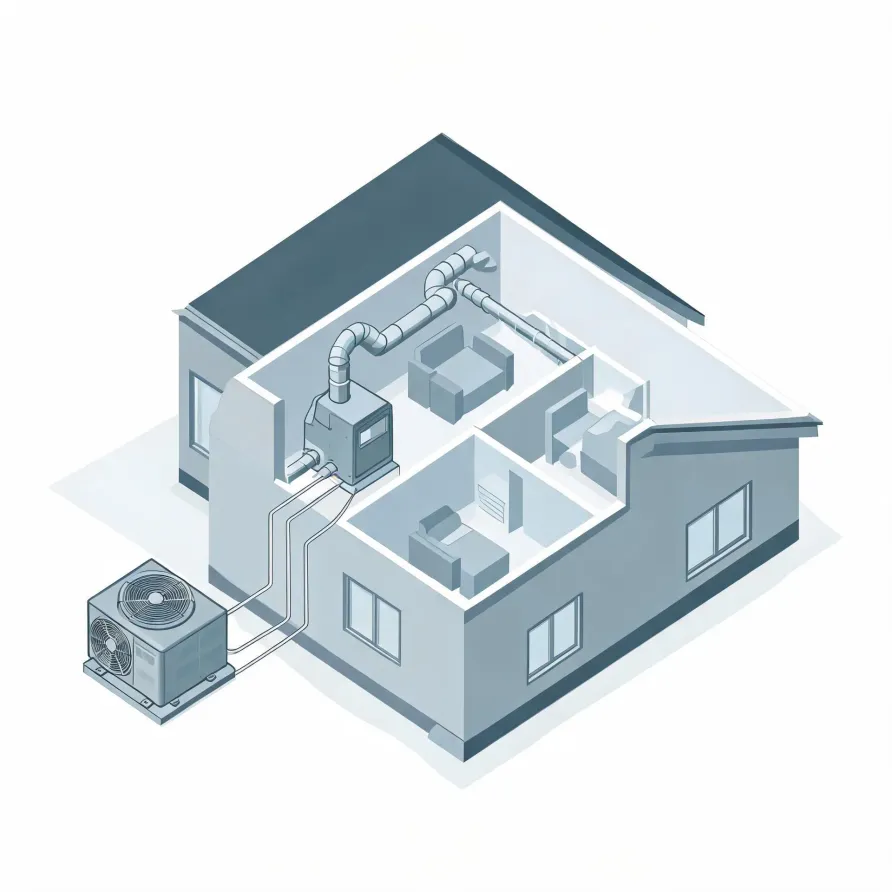
The outdoor unit is the piece most homeowners see first, mounted on a concrete pad or wall bracket beside the house, and it holds the compressor and the fan that exchange heat with the outside air. Inside, an air handler sits in a closet, attic, or utility room and pushes conditioned air through the home.
A refrigerant line set runs between the two units, typically along an exterior wall, carrying the fluid that links the indoor and outdoor sides into a single system. A thermostat on an interior wall serves as the control point, telling both units when to run and at what level.
The drawing beside this text shows the general layout of a heat pump system, and a licensed contractor determines exactly how each piece fits the configuration of your house.
Get matched in Gilmer CountyGilmer County by the Numbers
76 severe weather events were recorded in Gilmer County, Georgia between 2015 and 2024.
NOAA National Centers for Environmental Information, Storm Events Database, bulk CSV export, events 2015-01-01 through 2024-12-31.Half the homes in Gilmer County, Georgia were built in 1998 or earlier (2020-2024 ACS 5-year).
U.S. Census Bureau, 2020-2024 American Community Survey 5-Year EstimatesGilmer County, Georgia holds 18,507 housing units (2020-2024 ACS 5-year).
U.S. Census Bureau, 2020-2024 American Community Survey 5-Year EstimatesOwners occupy 80.7% of the occupied homes in Gilmer County, Georgia (2020-2024 ACS 5-year).
U.S. Census Bureau, 2020-2024 American Community Survey 5-Year EstimatesSevere Weather Events in Gilmer County
Heat pump performance is tied directly to what the climate demands of it, and that demand is shaped by how hard the weather swings. Contractors sizing and installing equipment in Gilmer County factor in local conditions that no national specification captures.
76 severe weather events, 2015–2024. Source: NOAA National Centers for Environmental Information, Storm Events Database.