
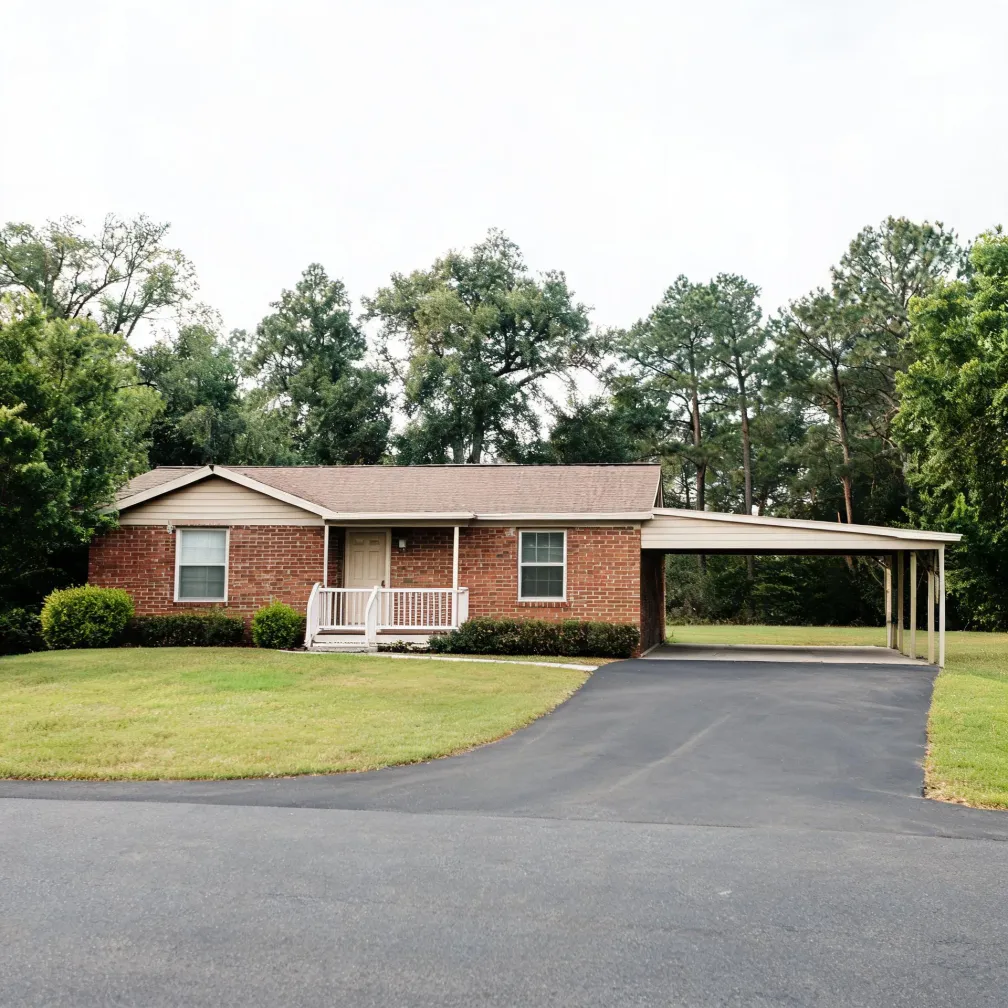
What Georgia homes are up against.
NOAA National Centers for Environmental Information, Storm Events Database, bulk CSV export, events 2015-01-01 through 2024-12-31. · U.S. Census Bureau, 2020-2024 American Community Survey 5-Year Estimates
A heat pump here earns its hours mostly in cooling mode, and the heating side spends long stretches standing off. Homes in Georgia run heat about five months a year, from November through March. That idle period is where problems hide: a reversing valve that sticks or a refrigerant charge that drifted low goes unnoticed through the warm months and shows up only when the system is first asked to heat in earnest. A contractor who knows how these systems come out of a long idle period will check the heating function before it matters, not after.
A contractor quoting a heat pump job in Georgia has to treat the existing duct system and electrical service as unknowns until they have looked at them. Half the homes in Georgia were built in 1992 or earlier (2020-2024 ACS 5-year). Equipment installed in houses built before current efficiency and load standards were written was sized against different rules, and what is in the house now reflects those older specifications. Ducts that worked for a furnace and a small cooling coil sometimes cannot move the air volume a heat pump demands. The panel may carry enough capacity, or it may not. A contractor checks both before writing a number.
Does where you live in Georgia put harder demands on your HVAC?
2015–2024 · Source: NOAA National Centers for Environmental Information, Storm Events Database.
A condenser sitting outside in Georgia faces hail, high winds, ice loading, and sustained heat that can run for months. Equipment sized or positioned without accounting for what the local climate actually delivers gets worked harder and fails sooner. The contractor you are matched with knows how those forces translate into equipment selection, placement, and the kind of installation that holds up.
Georgia HVAC Contractor License Requirements for Installation and Repair
Georgia sets its own licensing rules for HVAC installation and repair work. The provisions below are quoted directly from state sources, not paraphrased.
Georgia licenses conditioned air contractors in two classes and the size of the equipment decides which one is needed: a Class I licence is restricted to systems no larger than 175,000 BTU of heating and 60,000 BTU of cooling, and a Class II licence is unrestricted.
A state license requirement means the law decides who is permitted to do this work, and an unlicensed contractor is not a cheaper option. The contractors this site routes requests to hold the license these provisions describe. That is the filter a request passes through before it reaches anyone.
See the sourced Georgia HVAC licensing provisions2 provisions
Georgia licenses conditioned air contractors in two classes and the size of the equipment decides which one is needed: a Class I licence is restricted to systems no larger than 175,000 BTU of heating and 60,000 BTU of cooling, and a Class II licence is unrestricted.
A Georgia conditioned air contractor licence is not granted on an application alone: the State Construction Industry Licensing Board requires documented field experience, a score of at least seventy on its examination, and its fees before it issues either class.