Tell us about the job
Takes about a minute. No obligation.
Sizing a heat pump for Quitman County starts with what the local climate actually asks of the equipment. 31 severe weather events were recorded in Quitman County, Georgia between 2015 and 2024. At that rate, severe weather touches a system infrequently enough that it does not drive installation decisions the way it might elsewhere in the state. What drives them here is whether the contractor sizes the unit to the house's real load and seals and commissions it correctly. A unit that is oversized or poorly charged on day one will underperform in any season, storm or not.
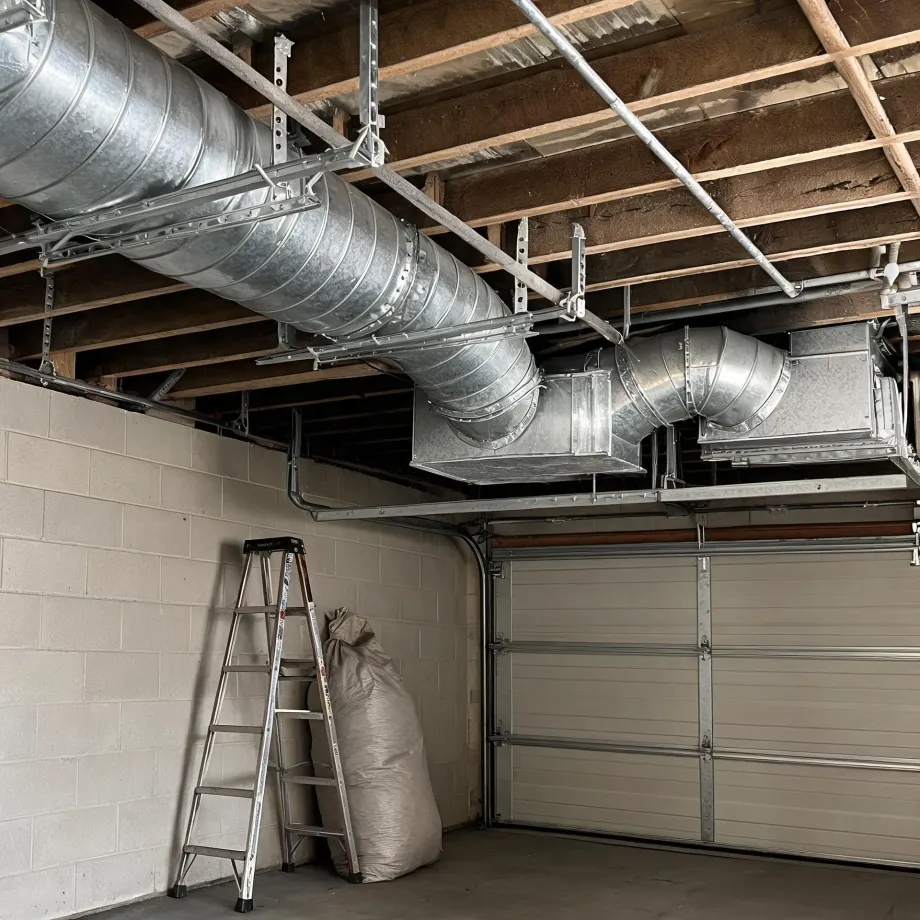
Ductwork designed for a different system shapes what a heat pump installation actually involves here. Half the homes in Quitman County, Georgia were built in 1986 or earlier (2020-2024 ACS 5-year). When a contractor prices a job in this county, the electrical panel and the existing duct layout are what they have to assess before anything else gets quoted, because both were sized for whatever the house originally ran. If the ducts are undersized or poorly sealed, the new unit cannot perform to spec regardless of what was ordered. That assessment, done before the equipment is ever selected, is where the job either stays straightforward or gets complicated.
What a Heat Pump Installation Covers
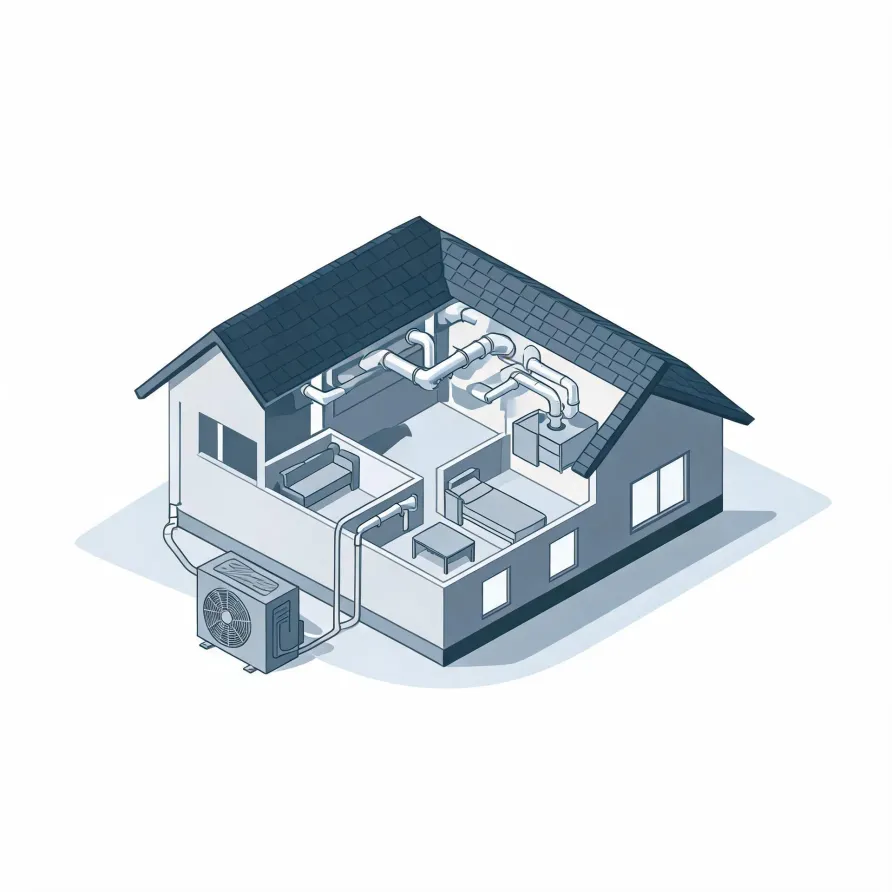
The outdoor unit is the piece most homeowners notice first. It sits on a concrete pad or wall bracket outside the house and holds the compressor and the outdoor coil, which together do the core work of the system. Inside, the air handler mounts in a closet, attic, or utility room and moves conditioned air through the home.
A refrigerant line set runs between the two units, connecting them through an exterior wall. The thermostat goes on an interior wall and gives the homeowner control over the whole system. A condensate drain line carries moisture away from the air handler to a nearby drain or outside.
The drawing shows the general layout of these components, and a licensed contractor determines exactly how each one applies to your house.
Get matched in Quitman CountyQuitman County, by the numbers
31 severe weather events were recorded in Quitman County, Georgia between 2015 and 2024.
NOAA National Centers for Environmental Information, Storm Events Database, bulk CSV export, events 2015-01-01 through 2024-12-31.Half the homes in Quitman County, Georgia were built in 1986 or earlier (2020-2024 ACS 5-year).
U.S. Census Bureau, 2020-2024 American Community Survey 5-Year EstimatesQuitman County, Georgia holds 1,767 housing units (2020-2024 ACS 5-year).
U.S. Census Bureau, 2020-2024 American Community Survey 5-Year EstimatesOwners occupy 84.3% of the occupied homes in Quitman County, Georgia (2020-2024 ACS 5-year).
U.S. Census Bureau, 2020-2024 American Community Survey 5-Year EstimatesSevere Weather Events in Quitman County
Weather conditions drive how hard a heat pump works and how long it lasts. What gets recorded here shapes the sizing, setup, and durability decisions a contractor makes for this area.
31 severe weather events, 2015–2024. Source: NOAA National Centers for Environmental Information, Storm Events Database.