Tell us about the job
Takes about a minute. No obligation.
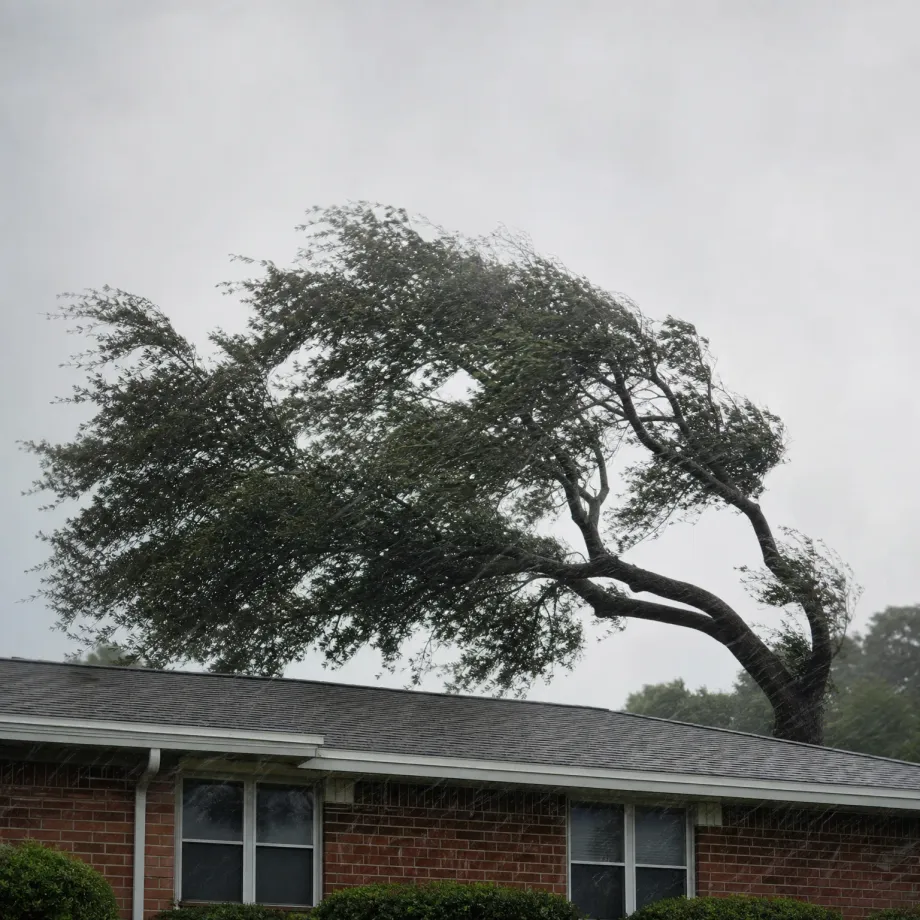
A contractor quoting a heat pump installation in Baldwin County is working from the house first: its square footage, its insulation, its duct layout. 60 severe weather events were recorded in Baldwin County, Georgia between 2015 and 2024. At that rate, severe weather is an occasional fact of life here, not a standing operational condition, so the sizing decisions and equipment choices a contractor makes are shaped mainly by how the structure itself holds or loses heat. A system that fails here almost certainly failed because of age or a poor original install.
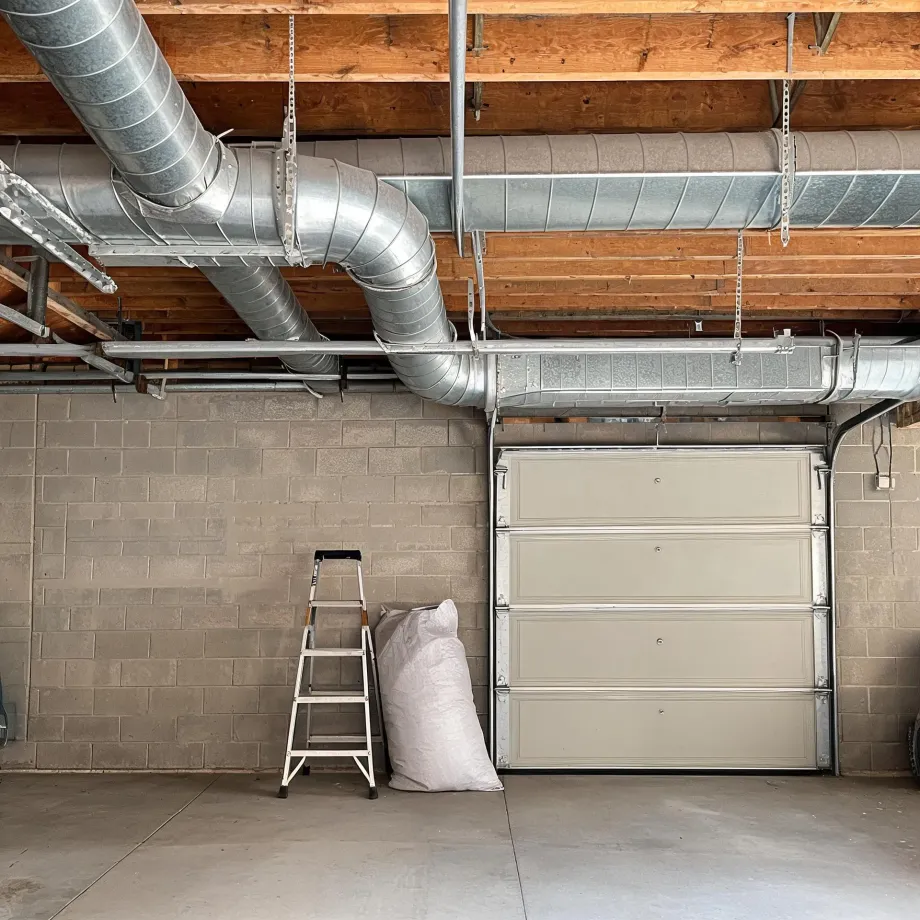
Ductwork laid down for an older system was sized and routed for that system's specific airflow, and a heat pump draws and distributes air differently. Half the homes in Baldwin County, Georgia were built in 1987 or earlier (2020-2024 ACS 5-year). That gap is what a contractor has to resolve before the new unit can be matched and priced: whether the existing runs, returns, and electrical service will carry what a modern heat pump asks of them, or whether part of the job is rebuilding what is already in the walls.
The Parts of a Heat Pump Installation
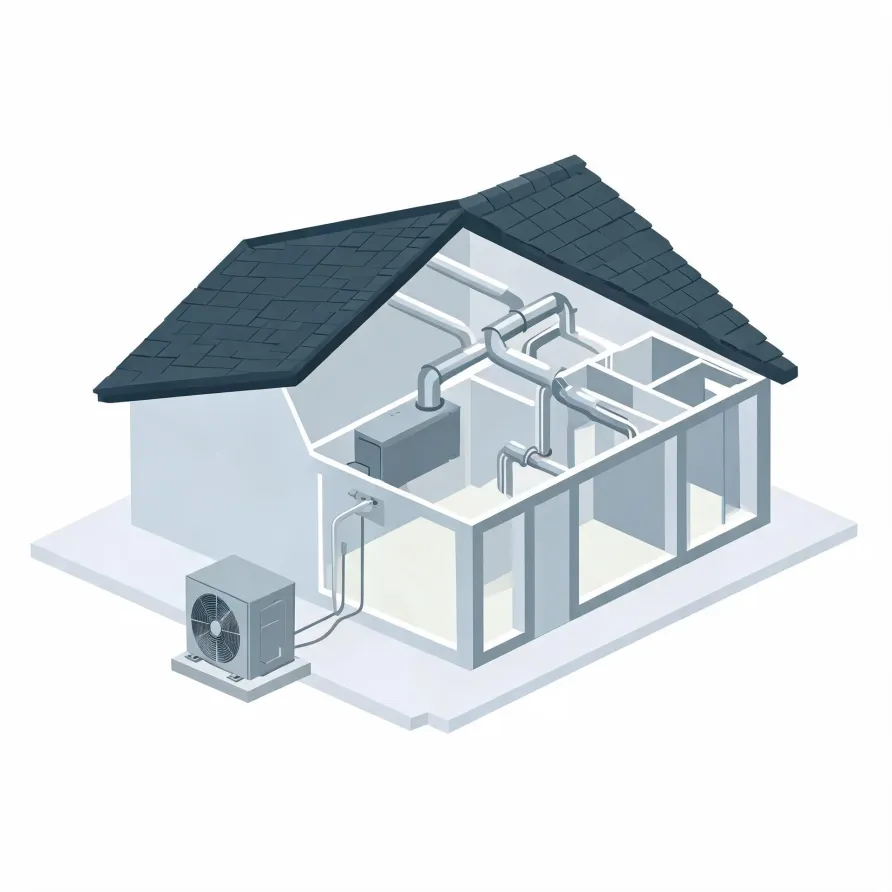
The outdoor unit is the piece most homeowners see first, sitting on a concrete pad or bracket outside the house. Inside, the air handler mounts in a utility closet, attic, or basement and moves conditioned air through the home. Together these two cabinets are the core of what a contractor places and connects.
A refrigerant line set runs between the two units, carrying the working fluid through insulated copper tubing along the exterior wall. A thermostat goes on an interior wall and gives the homeowner control over the whole system. The condensate drain line runs from the air handler to a floor drain or outside, carrying away moisture pulled from indoor air.
The drawing shows a typical layout, and a licensed contractor determines exactly how each piece fits the conditions of your particular house.
Get matched in Baldwin CountyBaldwin County by the numbers
60 severe weather events were recorded in Baldwin County, Georgia between 2015 and 2024.
NOAA National Centers for Environmental Information, Storm Events Database, bulk CSV export, events 2015-01-01 through 2024-12-31.Half the homes in Baldwin County, Georgia were built in 1987 or earlier (2020-2024 ACS 5-year).
U.S. Census Bureau, 2020-2024 American Community Survey 5-Year EstimatesBaldwin County, Georgia holds 20,302 housing units (2020-2024 ACS 5-year).
U.S. Census Bureau, 2020-2024 American Community Survey 5-Year EstimatesOwners occupy 61.1% of the occupied homes in Baldwin County, Georgia (2020-2024 ACS 5-year).
U.S. Census Bureau, 2020-2024 American Community Survey 5-Year EstimatesSevere Weather Events in Baldwin County
The weather a county sees year over year shapes how hard heating and cooling equipment has to work and how long it lasts. For heat pump installation in Baldwin County, local conditions are part of the sizing and equipment decision, not an afterthought.
60 severe weather events, 2015–2024. Source: NOAA National Centers for Environmental Information, Storm Events Database.