Tell us about the job
Takes about a minute. No obligation.
A contractor quoting a heat pump installation in Macon County works out the load from the building, its orientation, and how the house is sealed, because the local weather record does not push that calculation hard. 32 severe weather events were recorded in Macon County, Georgia between 2015 and 2024. At that rate, severe weather is an occasional event here, and sizing decisions rest on the structure and the household demand rather than on accumulated storm exposure. A unit installed correctly for this site will carry the actual load it faces.
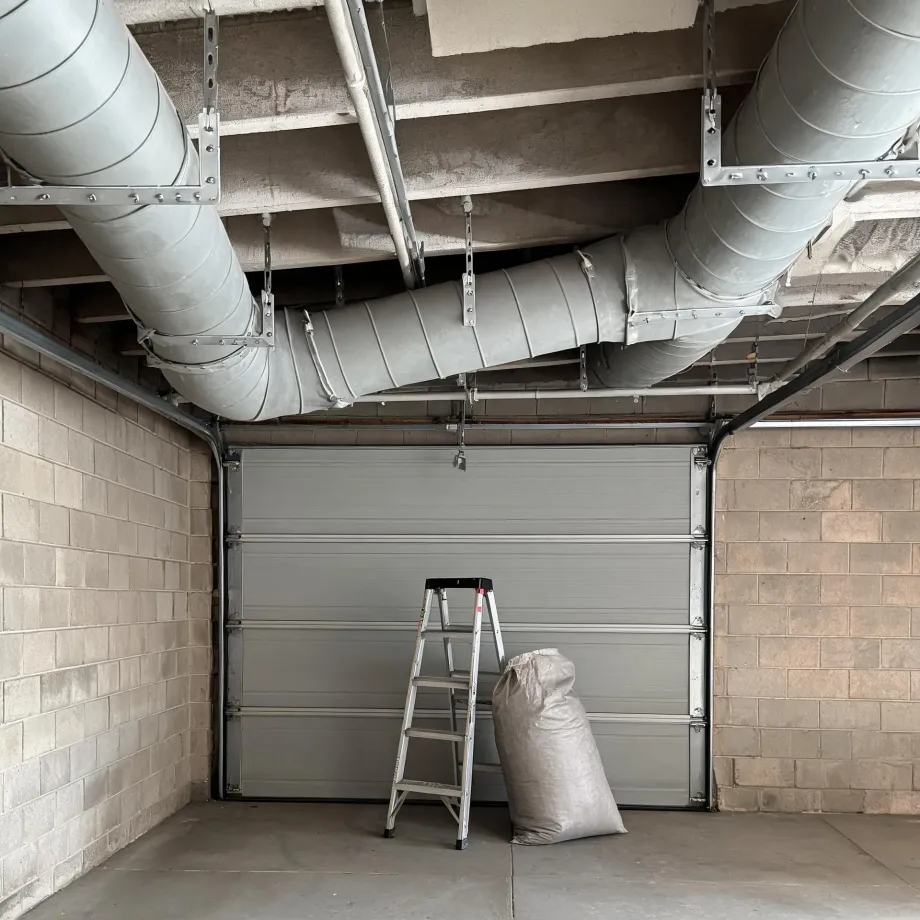
Ductwork sized and routed for older heating and cooling equipment shapes what a contractor finds when they open the walls of a Macon County home for a heat pump installation. Half the homes in Macon County, Georgia were built in 1978 or earlier (2020-2024 ACS 5-year). A heat pump moves more air at lower temperature differentials than the equipment much of this stock was originally built around, and ducts that were never sized for those airflow demands can restrict performance before the new unit runs a single cycle. Electrical service is the second variable: older panels often need evaluation before a contractor can quote the job with confidence.
What a Heat Pump Install Puts in Your Home
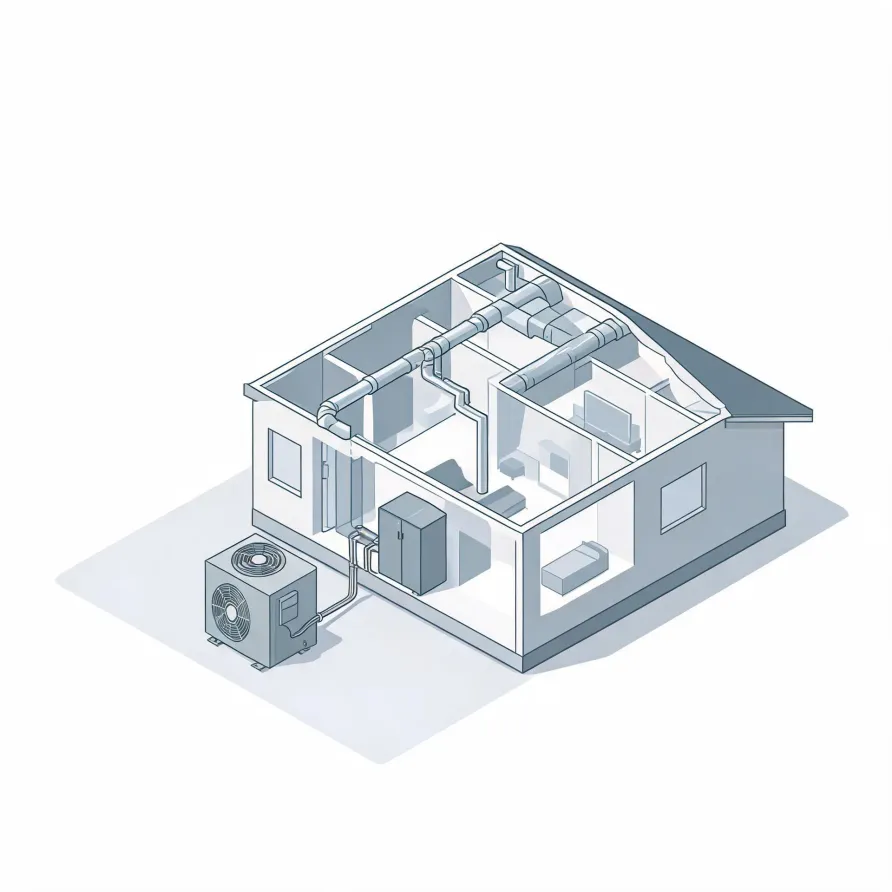
The outdoor unit sits on a pad beside the house and holds the compressor and one coil. The indoor air handler mounts inside, usually in a closet, attic, or mechanical room, and it carries the second coil along with the blower that moves air through the home. Together these two cabinets are what a homeowner is buying when they buy a heat pump.
A refrigerant line set runs between the two units, connecting the outdoor pad to wherever the air handler sits inside. A thermostat mounts on an interior wall and gives the homeowner control over the whole system. A condensate drain line runs from the air handler to carry away moisture the indoor coil pulls from the air.
The drawing shows a typical layout, and a licensed contractor determines exactly what applies to your house.
Get matched in Macon CountyMacon County, Georgia, by the numbers
32 severe weather events were recorded in Macon County, Georgia between 2015 and 2024.
NOAA National Centers for Environmental Information, Storm Events Database, bulk CSV export, events 2015-01-01 through 2024-12-31.Half the homes in Macon County, Georgia were built in 1978 or earlier (2020-2024 ACS 5-year).
U.S. Census Bureau, 2020-2024 American Community Survey 5-Year EstimatesMacon County, Georgia holds 5,135 housing units (2020-2024 ACS 5-year).
U.S. Census Bureau, 2020-2024 American Community Survey 5-Year EstimatesOwners occupy 65.4% of the occupied homes in Macon County, Georgia (2020-2024 ACS 5-year).
U.S. Census Bureau, 2020-2024 American Community Survey 5-Year EstimatesSevere Weather Events in Macon County
Heating and cooling equipment carries the load that local weather puts on it, and that load varies by place. A heat pump sized and installed for Macon County conditions is built around what this area actually asks of it.
32 severe weather events, 2016–2023. Source: NOAA National Centers for Environmental Information, Storm Events Database.