Tell us about the job
Takes about a minute. No obligation.
A heat pump repair call in Turner County starts with what the system has actually been through, and a contractor has to separate wear from weather before they can quote accurately. 78 severe weather events were recorded in Turner County, Georgia between 2015 and 2024. At that rate, severe weather is a recurring presence in this area, not a once-a-decade event, so components like capacitors, contactors, and refrigerant lines do carry a genuine environmental load. Even so, the failures a contractor finds most often trace to age and installation decisions made years before any storm rolled through. Outdoor coil condition, refrigerant charge, and electrical connections tell that story faster than the weather record does.
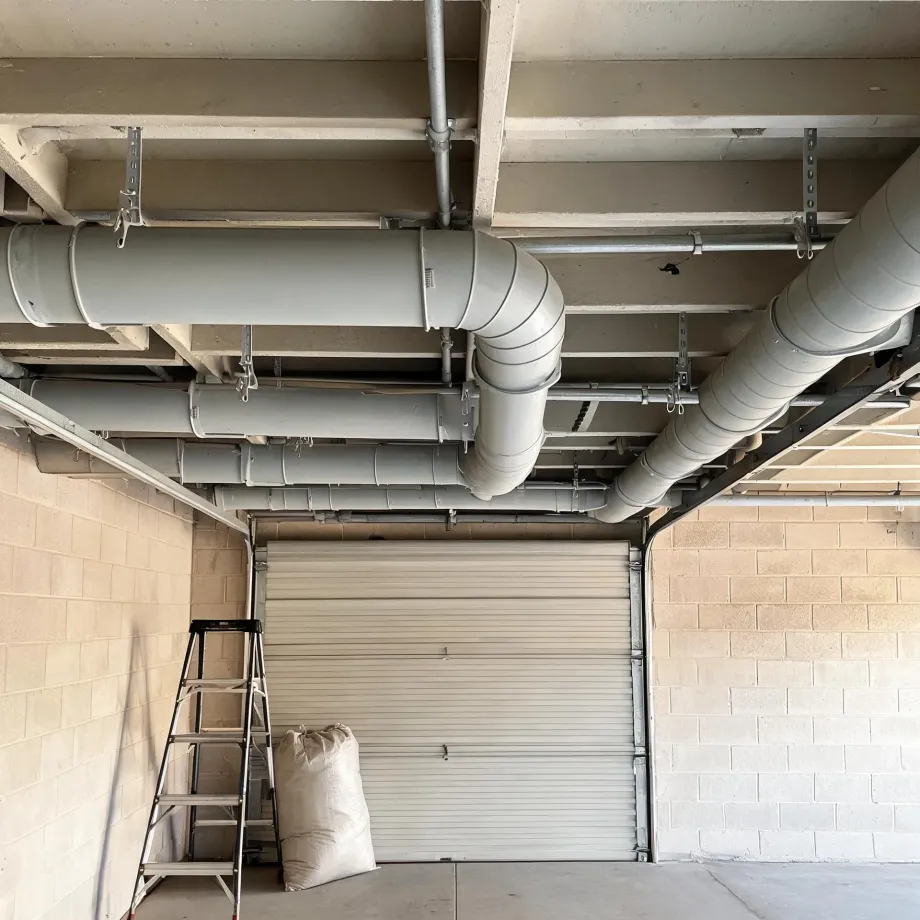
Ductwork laid down for a different era of heating and cooling carries its history in the joints, insulation, and airflow paths a contractor has to trace before any repair makes sense. Half the homes in Turner County, Georgia were built in 1977 or earlier (2020-2024 ACS 5-year). A heat pump dropped into a house that old was adapted into infrastructure built around something else, and the condition of what surrounds the unit shapes the repair as much as the unit itself. Refrigerant lines, electrical connections, and air handling components all bear the marks of that long fit-up. What the opened system contains is the answer a contractor is actually working toward.
The Parts of a Heat Pump a Contractor Checks First
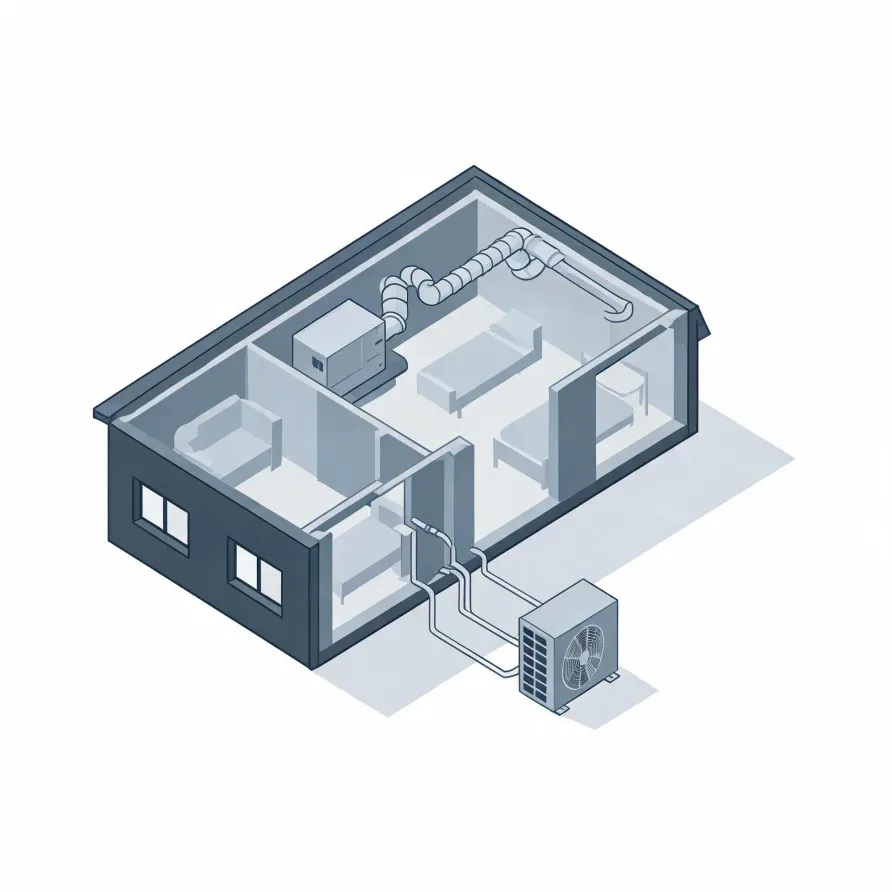
The outdoor unit is the piece most homeowners recognize: a metal cabinet sitting on a pad beside the house that holds the compressor and the outdoor coil. The compressor is where most repair calls start. When it labors or fails, the system loses its ability to move heat in either direction. The outdoor coil, wrapped around the cabinet's interior, is the other frequent problem spot, particularly when it has bent fins or refrigerant loss behind a leak.
Inside the house, the air handler holds the indoor coil and the blower fan, and it is usually tucked in a closet, attic, or utility room. The blower pushes conditioned air through the house, and the indoor coil is where refrigerant does its work on that air. Between the two units, the refrigerant lines and the reversing valve, which is what allows a heat pump to shift between heating and cooling, round out what a contractor traces when diagnosing a problem.
The drawing shows a typical heat pump layout, and a licensed contractor will determine which components and conditions apply to your specific home.
Get matched in Turner CountyTurner County, Georgia, by the numbers
78 severe weather events were recorded in Turner County, Georgia between 2015 and 2024.
NOAA National Centers for Environmental Information, Storm Events Database, bulk CSV export, events 2015-01-01 through 2024-12-31.Half the homes in Turner County, Georgia were built in 1977 or earlier (2020-2024 ACS 5-year).
U.S. Census Bureau, 2020-2024 American Community Survey 5-Year EstimatesTurner County, Georgia holds 3,927 housing units (2020-2024 ACS 5-year).
U.S. Census Bureau, 2020-2024 American Community Survey 5-Year EstimatesOwners occupy 63.8% of the occupied homes in Turner County, Georgia (2020-2024 ACS 5-year).
U.S. Census Bureau, 2020-2024 American Community Survey 5-Year EstimatesSevere Weather Events in Turner County by Year
Heat pumps in Turner County work against whatever the local climate throws at them, and Georgia weather can be hard on mechanical equipment. Repair needs here are shaped by local conditions, which is why weather history belongs alongside any honest look at heat pump service in this area.
78 severe weather events, 2015–2024. Source: NOAA National Centers for Environmental Information, Storm Events Database.