Tell us about the job
Takes about a minute. No obligation.
A heat pump failure in Heard County sends a contractor looking at refrigerant levels, contactor wear, and coil condition before the weather record enters the picture at all. 42 severe weather events were recorded in Heard County, Georgia between 2015 and 2024. At that rate, severe weather is an event here, not a running condition, and a system that is struggling has usually been struggling for reasons the seasons alone did not create. Compressors that fail in houses like these tend to fail from age and deferred service, not from cumulative storm load. A contractor who quotes a repair here prices what they find inside the unit.
Ductwork and electrical service in housing this old were sized for whatever ran in the house first, and heat pumps came later. Half the homes in Heard County, Georgia were built in 1985 or earlier (2020-2024 ACS 5-year). A contractor opening a heat pump in stock like this finds that the repair lives in the unit: a compressor, a reversing valve, a control board, a refrigerant charge. What the house contributes is already done and largely fixed. Whether a given part is still manufactured for a system of that vintage is the harder question, and it is what drives the scope and the price of the job.
The Parts of a Heat Pump a Contractor Checks First
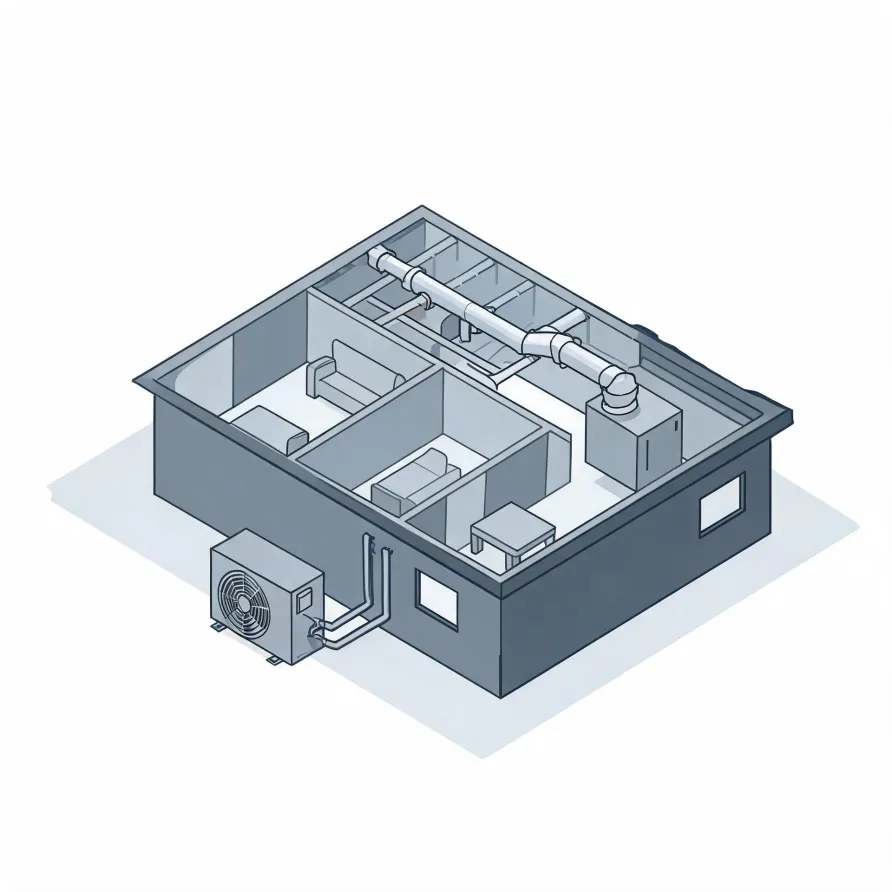
The outdoor unit is usually where a contractor starts. It holds the compressor, which is the heart of the system, along with the outdoor coil and a fan. When the compressor or coil is the problem, the house stops being heated or cooled altogether, so those pieces get attention early.
Inside the house, the air handler moves conditioned air through the home and contains the indoor coil and blower motor. The reversing valve, which tells the system whether to heat or cool, sits in the outdoor unit and is a common source of faults when the system runs in only one mode. The refrigerant lines connect both units and carry the working fluid between them.
The drawing shows a typical layout, and a licensed contractor determines which components apply to your specific house and situation.
Get matched in Heard CountyHeard County, by the numbers
42 severe weather events were recorded in Heard County, Georgia between 2015 and 2024.
NOAA National Centers for Environmental Information, Storm Events Database, bulk CSV export, events 2015-01-01 through 2024-12-31.Half the homes in Heard County, Georgia were built in 1985 or earlier (2020-2024 ACS 5-year).
U.S. Census Bureau, 2020-2024 American Community Survey 5-Year EstimatesHeard County, Georgia holds 4,818 housing units (2020-2024 ACS 5-year).
U.S. Census Bureau, 2020-2024 American Community Survey 5-Year EstimatesOwners occupy 72.3% of the occupied homes in Heard County, Georgia (2020-2024 ACS 5-year).
U.S. Census Bureau, 2020-2024 American Community Survey 5-Year EstimatesSevere Weather Events in Heard County
Weather puts hours on heating and cooling equipment whether or not anything breaks that day. A heat pump working hard through the conditions this area sees is one that warrants closer attention when something does go wrong.
42 severe weather events, 2015–2024. Source: NOAA National Centers for Environmental Information, Storm Events Database.