Tell us about the job
Takes about a minute. No obligation.
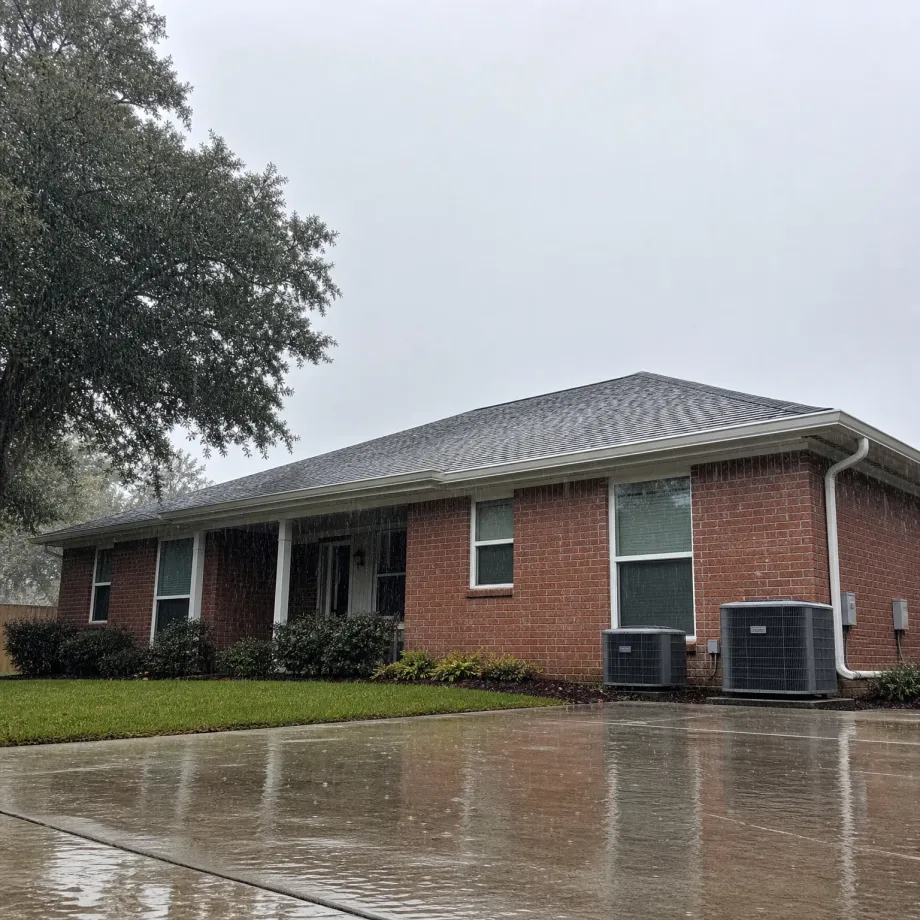
A contractor quoting a heat pump installation in Jefferson County is not working against a climate that hammers equipment year-round. 32 severe weather events were recorded in Jefferson County, Georgia between 2015 and 2024. At that rate, severe weather is an occasional fact of life here, not a standing operating condition, so it shapes the job at the margins rather than at the center of it. What a contractor has to establish before sizing a system is how the house is built, how it has been conditioned before, and what the existing ductwork can carry. Those variables drive the spec.
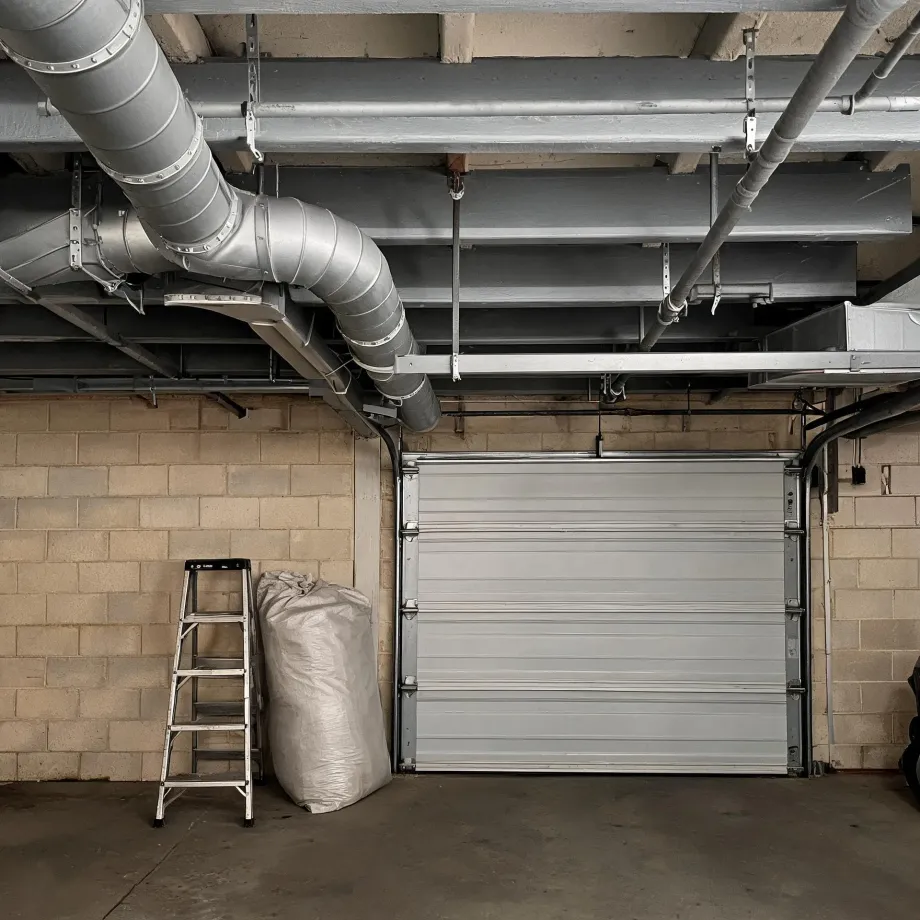
Ductwork laid down for older heating equipment carries assumptions about airflow, return sizing, and run lengths that a heat pump does not share. Half the homes in Jefferson County, Georgia were built in 1981 or earlier (2020-2024 ACS 5-year). A contractor quoting a heat pump installation here spends real time on that existing duct system, checking whether it moves the volumes the new unit needs and whether the electrical service will carry the load, before the equipment choice matters much at all. What the ducts can do sets the ceiling on what the installation can accomplish.
What a Heat Pump Installation Puts in Your Home
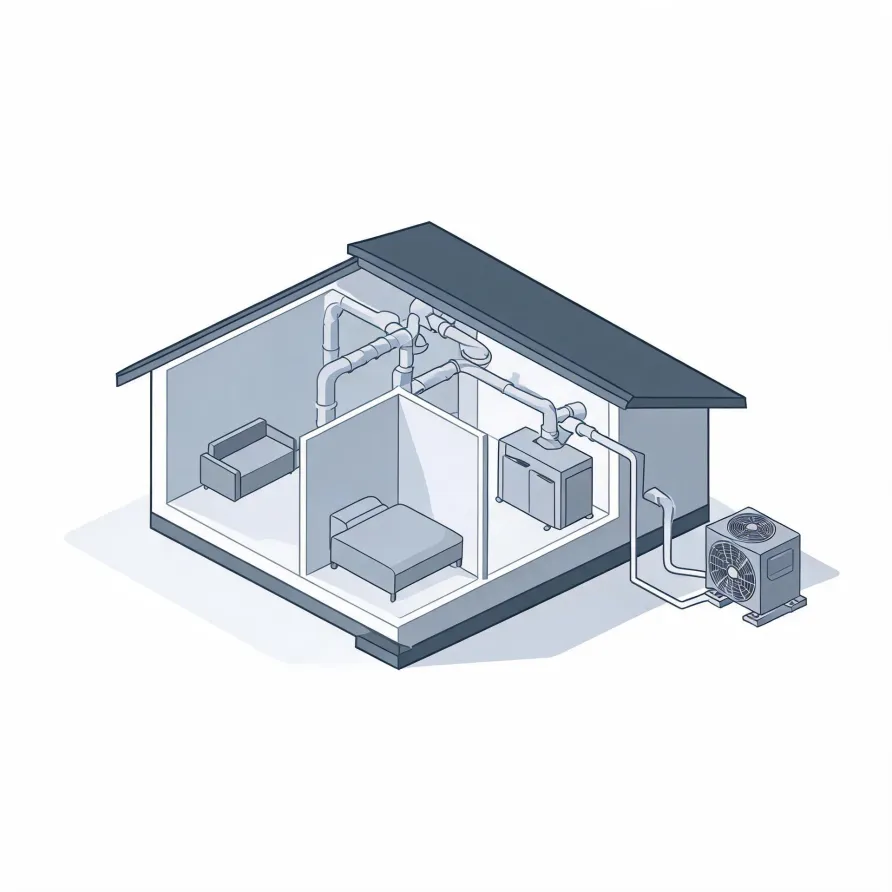
The outdoor unit sits on a concrete pad or bracket outside the house and holds the compressor and one set of coils. Inside, an air handler mounts in a utility space, closet, or attic and circulates conditioned air through the home. Together these two cabinets are the core of what a contractor installs.
A refrigerant line set runs between the two units through a small penetration in the wall, carrying the working fluid back and forth. A thermostat goes on an interior wall where it can read the living space and give the homeowner control over the system.
The drawing beside this text shows the general layout of these components, and a licensed contractor determines exactly how each one is placed and connected in your specific home.
Get matched in Jefferson CountyJefferson County by the Numbers
32 severe weather events were recorded in Jefferson County, Georgia between 2015 and 2024.
NOAA National Centers for Environmental Information, Storm Events Database, bulk CSV export, events 2015-01-01 through 2024-12-31.Half the homes in Jefferson County, Georgia were built in 1981 or earlier (2020-2024 ACS 5-year).
U.S. Census Bureau, 2020-2024 American Community Survey 5-Year EstimatesJefferson County, Georgia holds 7,172 housing units (2020-2024 ACS 5-year).
U.S. Census Bureau, 2020-2024 American Community Survey 5-Year EstimatesOwners occupy 68.1% of the occupied homes in Jefferson County, Georgia (2020-2024 ACS 5-year).
U.S. Census Bureau, 2020-2024 American Community Survey 5-Year EstimatesSevere Weather Events in Jefferson County
Jefferson County's climate puts real demands on heating and cooling equipment over time. A heat pump sized and installed for local conditions handles those demands better than one spec'd for somewhere else.
32 severe weather events, 2015–2024. Source: NOAA National Centers for Environmental Information, Storm Events Database.