Tell us about the job
Takes about a minute. No obligation.
Sizing a heat pump for Worth County starts with what the climate actually demands of the system, not just the square footage of the house. 179 severe weather events were recorded in Worth County, Georgia between 2015 and 2024. At that rate, severe weather is a routine operating condition here, not an occasional disruption, and a contractor who ignores it will undersize the system or select components rated for a quieter environment. The compressor, the refrigerant lines, and the electrical connections all carry that load over years. A properly scoped install accounts for it from the start.
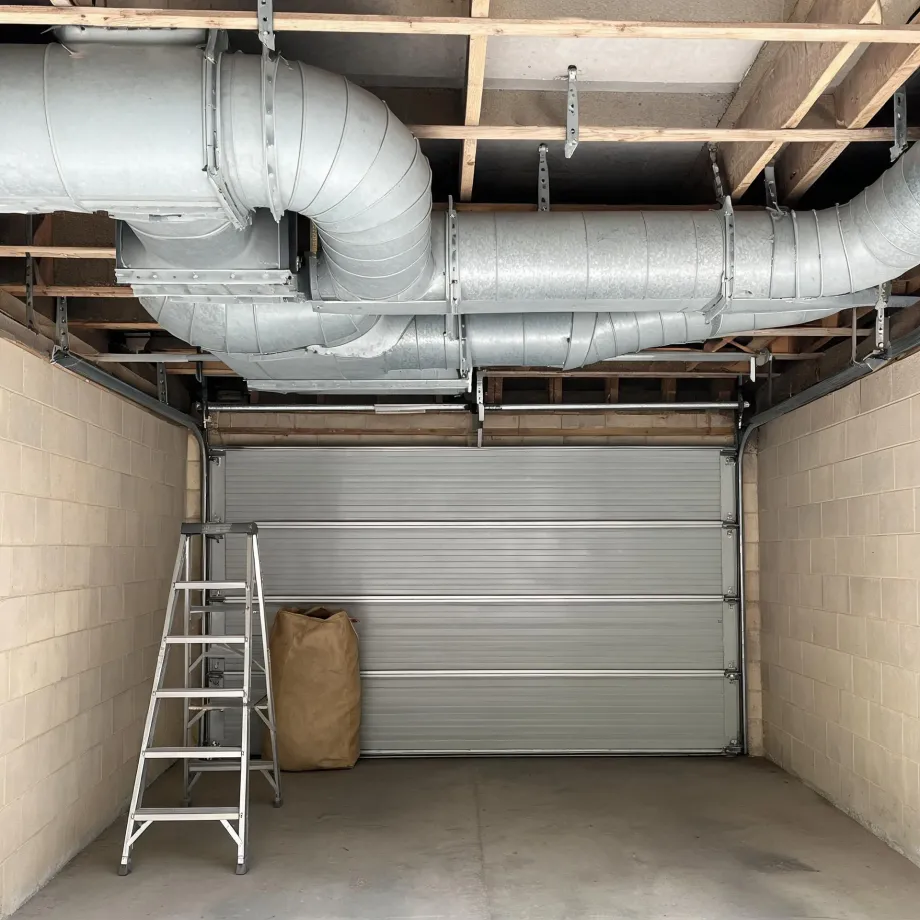
Ductwork laid down for a furnace-and-window-unit house was sized for a different kind of load. Half the homes in Worth County, Georgia were built in 1985 or earlier (2020-2024 ACS 5-year). A contractor quoting a heat pump installation here has to assess what that existing duct network will actually do with the airflow a heat pump moves, and whether the electrical service the house was wired with will carry the new load. Those are separate evaluations, and either one can change the scope of the job before the unit is ever chosen.
What a Heat Pump Installation Puts in Your Home
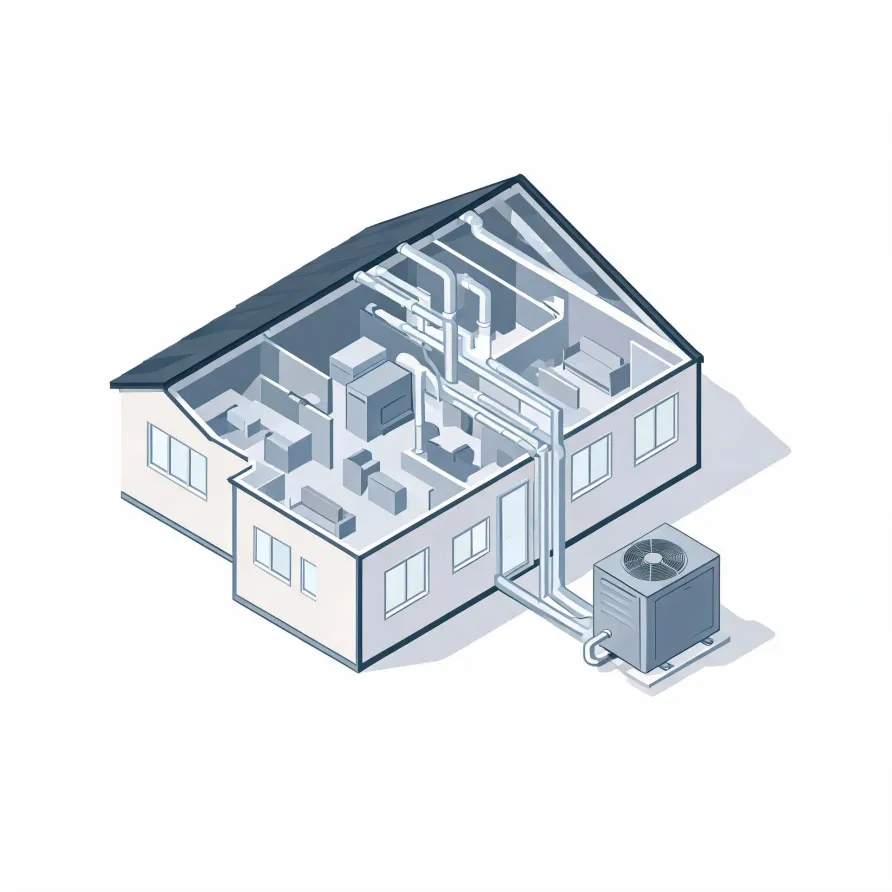
The outdoor unit sits on a pad beside the house and holds the compressor and the coil that exchange heat with the outside air. The indoor air handler mounts in a utility space, closet, or attic and moves conditioned air through the home. These two units are the core of what a contractor sets in place.
A refrigerant line set runs between the outdoor unit and the air handler, carrying the working fluid that links the two sides of the system. A thermostat mounts on an interior wall and gives the homeowner control over when and how the system runs. Some installations also include a supplemental electric heat strip inside the air handler for the coldest days.
The drawing shows a typical layout, and a licensed contractor determines exactly what applies to your house.
Get matched in Worth CountyWorth County, Georgia, by the numbers
179 severe weather events were recorded in Worth County, Georgia between 2015 and 2024.
NOAA National Centers for Environmental Information, Storm Events Database, bulk CSV export, events 2015-01-01 through 2024-12-31.Half the homes in Worth County, Georgia were built in 1985 or earlier (2020-2024 ACS 5-year).
U.S. Census Bureau, 2020-2024 American Community Survey 5-Year EstimatesWorth County, Georgia holds 9,326 housing units (2020-2024 ACS 5-year).
U.S. Census Bureau, 2020-2024 American Community Survey 5-Year EstimatesOwners occupy 73.7% of the occupied homes in Worth County, Georgia (2020-2024 ACS 5-year).
U.S. Census Bureau, 2020-2024 American Community Survey 5-Year EstimatesSevere Weather Events in Worth County
Weather patterns shape how hard heating and cooling equipment works, and how long it lasts. A heat pump sized and installed for local conditions handles that load better than one spec'd for somewhere else.
179 severe weather events, 2015–2024. Source: NOAA National Centers for Environmental Information, Storm Events Database.